Service
Patios
A patio is a paved outdoor living space, built to extend how you can use your garden. Unlike a single driveway surface, a patio can be built in several different materials, so choosing the right one depends on the look you want, how the space will be used, and how it relates to your house.
Connacht Driveway Experts builds patios across County Mayo, County Galway, County Roscommon and County Clare, working out the right material and layout for each property.
What Is Patios?
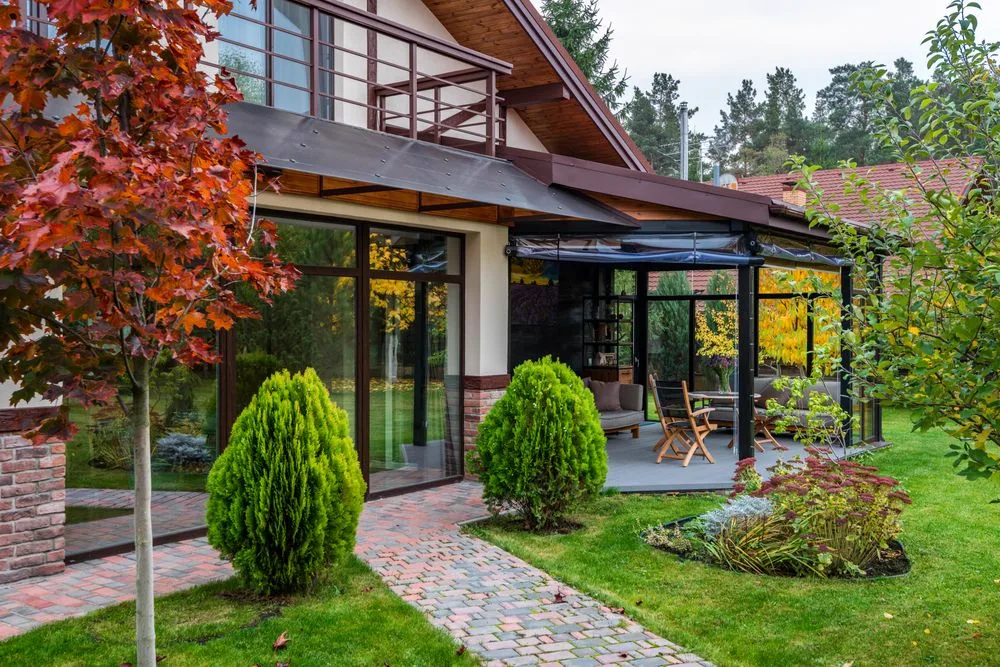
A patio is a paved area, usually adjoining the house or set within a garden, built for outdoor seating, dining or general use. It can be constructed from block paving, porcelain paving, poured concrete, or a mix of materials, and can include features such as steps, raised borders or planting beds built into the same project.
See the block paving, porcelain paving and concrete driveways pages for more detail on how each material performs specifically as a patio surface.
Where Patios Is Commonly Suitable
Patios suit gardens and outdoor spaces used for dining, entertaining or simply extending the usable area of the property. They also work well linking a driveway to a front door, or as a paved side passage, and can be built at the same time as a new driveway or as a standalone project.
Appearance and Finish Options
The appearance of a patio depends entirely on the material chosen, so it's worth reviewing the individual material pages alongside your own preferences.
- Block paving, for a patterned, traditional or characterful look
- Porcelain paving, for a contemporary, minimal-joint finish
- Poured concrete, for a clean, uniform surface in a chosen finish
- Combined materials, such as a paved seating area with a contrasting border
Advantages
- Extends usable outdoor living space
- Material and finish can be tailored to complement the house and any adjoining driveway
- Steps, seating walls and borders can be built as part of the same project
- Can be planned and installed alongside a new driveway for a coordinated finish
Limitations and Considerations
- Patios adjoining a house must allow for damp-proof course (DPC) clearance and falls away from the building, so levels near the house need particular care
- The choice of material affects slip resistance, maintenance and cost, and needs to suit how the space will be used
- Steps or changes in level add complexity and cost compared with a single flat area
Ground Preparation and Sub-Base
- Excavation to formation level, allowing for the correct finished level relative to the damp-proof course and any doorway thresholds
- A compacted sub-base appropriate to the paving material chosen
- Edge restraints suited to the material
- A bedding layer appropriate to the chosen paving type
Drainage Considerations
Falls must direct water away from the building and to a suitable drainage point. This is one of the more important technical considerations on any patio project, particularly where the patio sits close to external walls, doors or windows, and it's assessed as part of planning the work.
Typical Installation Process
- 01
Set levels relative to the house
Levels are set out relative to the damp-proof course and any thresholds before excavation.
- 02
Prepare sub-base and bedding
A sub-base and bedding layer suited to the chosen material are installed.
- 03
Lay the chosen paving
The paving material is laid, jointed or pointed to finish.
- 04
Finish edges and steps
Edges, borders and any steps are finished to complete the patio.
Maintenance
- Maintenance depends on the material chosen, so see the relevant service page (block paving, porcelain paving or concrete) for specifics
- Keeping drainage channels and gullies clear of debris is good practice regardless of material
Repair Considerations
- Unit paving, such as block paving or porcelain slabs, generally allows more straightforward localised repair than poured concrete, which cures as one continuous slab
Factors Affecting Price
We don’t publish fixed prices, since every property and project is different. The factors below generally influence a quotation.
- Total area to be paved
- Material chosen
- Levels and any steps required
- Proximity to the house and associated drainage detailing
- Site access
Comparing Patios With Other Surfaces
Choosing a patio material
Block paving, porcelain paving and concrete each perform differently as a patio surface. See the driveway surfaces guide and the individual service pages for a full comparison of appearance, maintenance and drainage before deciding.
See the full driveway surfaces guide to compare every option side by side.
Counties Served
Patios are installed across County Mayo, County Galway, County Roscommon and County Clare, often alongside a new driveway project.
Patios FAQs
What's the best material for a patio?
It depends on the look you want, your budget, and how the space will be used. We can advise once we understand your property and preferences — see the block paving, porcelain paving and concrete driveways pages for more detail on each option.
Does a patio need to slope away from the house?
Yes. Correct falls are needed to direct water away from the building rather than towards it, and this is assessed as part of planning any patio project.
Can a patio be built at the same time as a new driveway?
Yes, many projects combine both. This can be planned together when discussing your property, and may allow the works to be coordinated more efficiently.
Ready to talk about patios?
Tell us about your property and we'll help you work out the right surface for it.
Related Services
Block Paving
Individual concrete or clay paving blocks laid in a pattern over a compacted sub-base, giving a hard-wearing driveway that can be lifted and relaid in sections if ever needed.
Concrete Driveways
A poured, in-situ concrete surface finished plain, brushed, exposed-aggregate or patterned, giving a durable and largely jointless driveway.
Porcelain Paving
Dense, low-porosity porcelain slabs laid on a suitable bedding system, giving a contemporary, low-maintenance finish mainly used for patios and outdoor living areas.